
A Jungian therapist works from the psychological theories and clinical framework developed by Carl Jung. The basis of Jungian practice is called Analytical Psychology, which focuses not only on symptoms or behavior, but on the deeper meaning behind emotional suffering, dreams, symbols, relationships, and the process of becoming whole.
A central idea in Jungian psychology is that the unconscious communicates through symbols rather than logic alone. Jung observed that many emotional wounds, traumas, and inner conflicts cannot always be fully expressed through words. The psyche often speaks through images, sensations, metaphors, stories, and symbolic expression.
This understanding became one of the foundations for Sandplay Therapy.
Why Sand Is Used in Jungian Therapy
Sandplay Therapy developed from Jungian principles because sand allows a person to express unconscious material in a non-verbal, symbolic, and sensory way.
The sand tray creates what Jungian therapists often call a “free and protected space.” Within this space, clients use miniature figures and the tactile experience of sand to create scenes that reflect inner emotional realities, conflicts, memories, fears, desires, or developmental processes — often without consciously planning them.
The use of sand has several psychological functions:
1. Accessing the Unconscious
Working with sand bypasses purely intellectual thinking.
Touch, movement, and symbolic placement allow unconscious material to emerge naturally. Clients may reveal emotional truths they cannot yet articulate verbally.
This aligns with Jung’s belief that healing often occurs when unconscious material becomes visible and integrated into consciousness.
2. Symbolic Expression
Jung believed symbols carry emotional and transformative power. In sandplay:
- figures,
- landscapes,
- water,
- destruction,
- order,
- chaos,
- animals,
- journeys,
- boundaries,
can all reflect aspects of the psyche and archetypal patterns.
The tray becomes a symbolic representation of the client’s inner world.
3. Regulation of the Nervous System
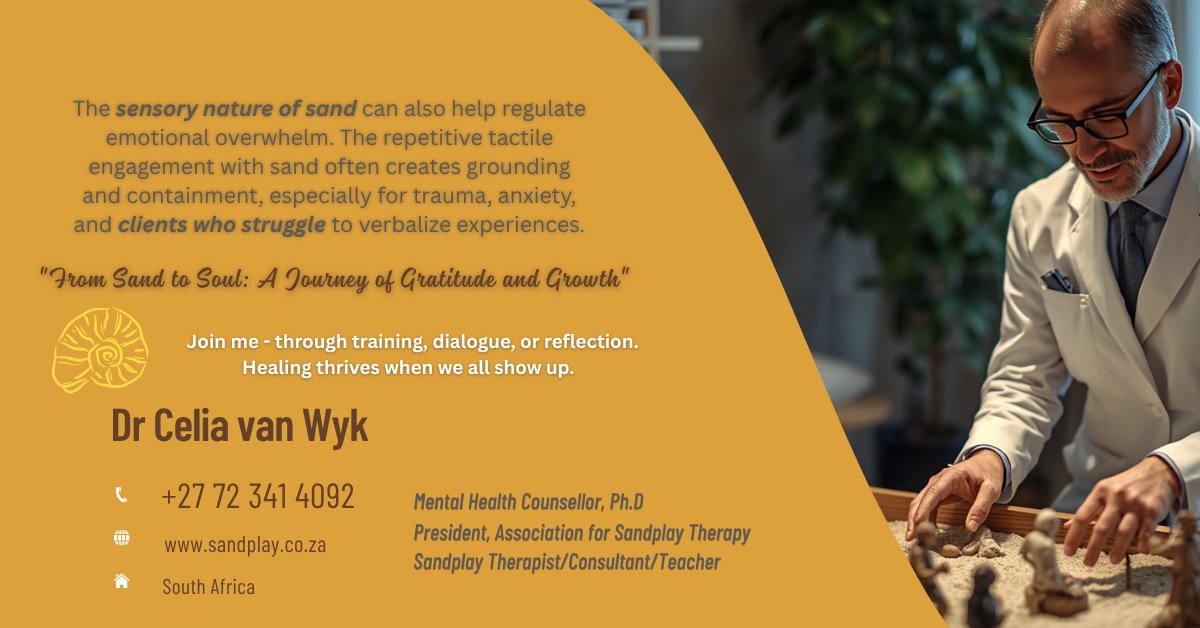
The sensory nature of sand can also help regulate emotional overwhelm. The repetitive tactile engagement with sand often creates grounding and containment, especially for trauma, anxiety, and children who struggle to verbalize experiences.
4. Non-Verbal Healing
Many experiences occur before language develops or exist beyond words entirely. Sandplay allows expression without pressure to explain or analyze immediately.
This is particularly important in:
- childhood trauma,
- grief,
- attachment wounds,
- developmental trauma,
- and deep emotional processes.
5. The Process of Individuation
From a Jungian perspective, Sandplay Therapy is not merely “playing in sand.” It is viewed as a symbolic process through which the psyche moves toward balance, integration, and wholeness — what Jung called individuation.
Over time, recurring symbols, themes, and transformations within the trays may reflect inner psychological change.
The foundation of sandplay therefore rests deeply within Jungian thought:
- the unconscious communicates symbolically,
- healing requires expression of unconscious material,
- and transformation occurs when the psyche is safely witnessed rather than controlled.
This is why a Jungian Therapist and depth-oriented practitioners view sandplay not simply as a technique, but as a profound symbolic healing process connected to the natural self-organizing capacity of the psyche.
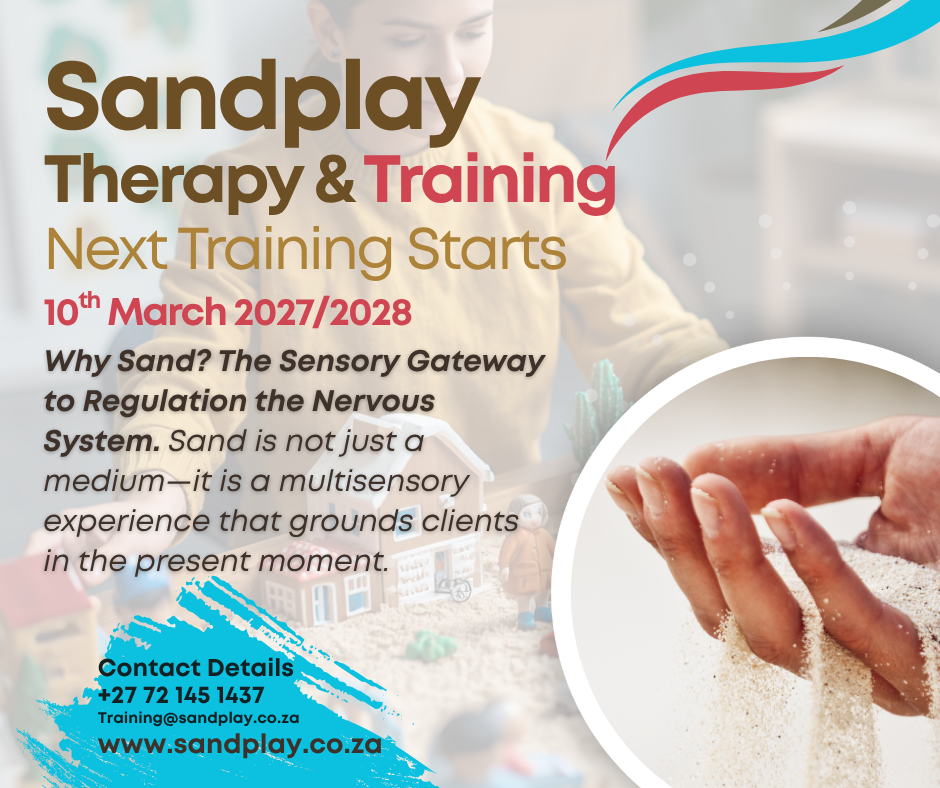 For decades, Sandplay Therapy has offered mental health professionals a profound way of working with trauma beyond words alone. Rooted in the work of Carl Jung and depth psychology, Sandplay Therapy allows unconscious material to emerge symbolically within a safe and protected space. Through the use of sand, symbols, and miniature figures, clients are often able to express and process trauma that may be inaccessible through traditional verbal therapy alone. As unconscious material becomes conscious, healing, integration, and emotional regulation can begin to unfold naturally.
Mental health professionals interested in deepening their therapeutic work and learning more about this symbolic and trauma-informed approach are invited to reach out regarding my one-year Sandplay Therapy Training commencing 10 March 2027. This training is designed for practitioners who wish to explore the therapeutic power of symbols, the unconscious, and the healing process within a clinically grounded and compassionate framework.
Join my Facebook page.

Comments are closed