
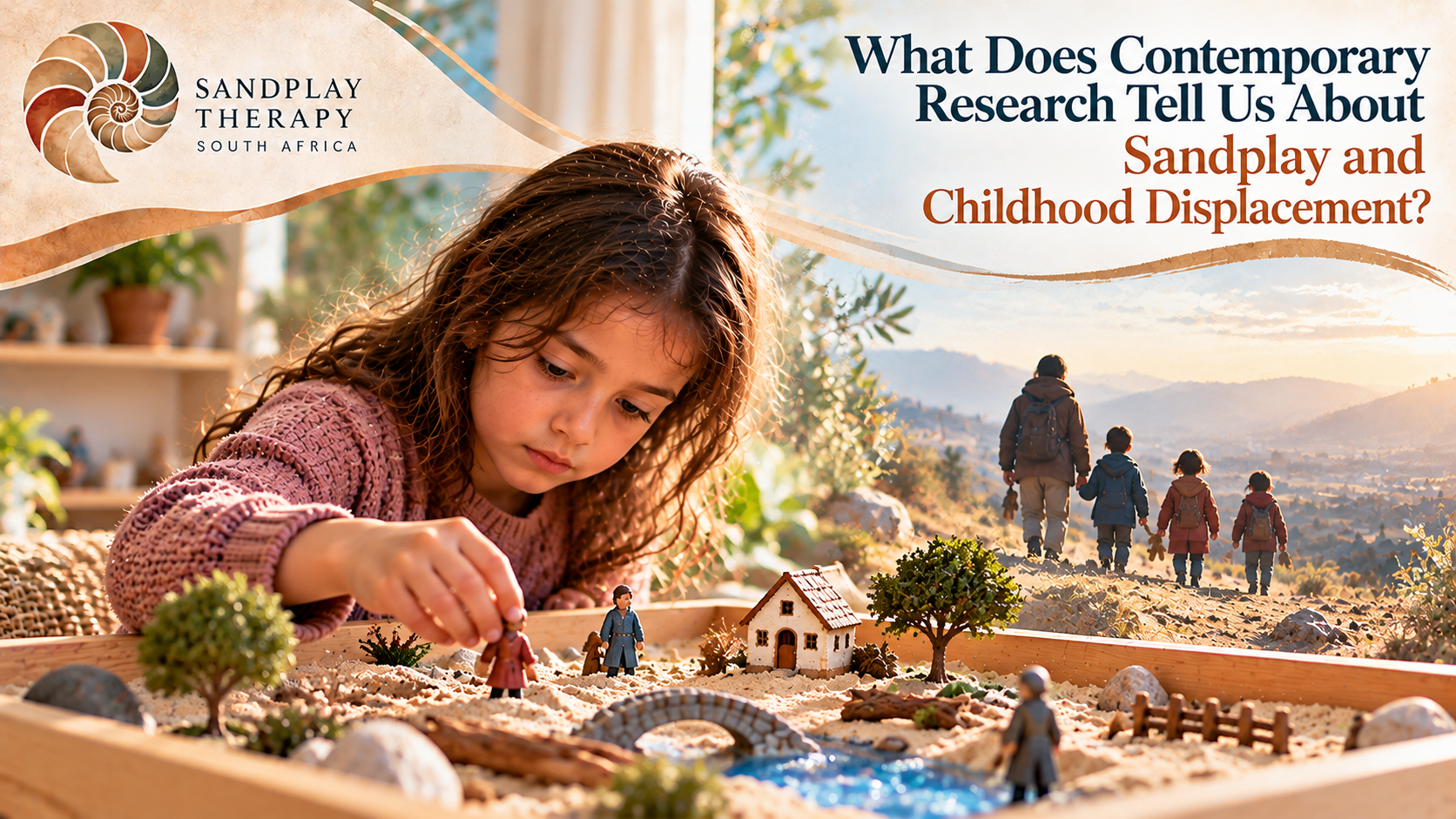
Displacement changes a child’s world long before they may have the words to explain what has happened.
When a child is forced to leave their home, community, school or familiar surroundings, the consequences can extend far beyond the loss of a physical place. Displacement may involve separation from family members, disrupted relationships, uncertainty, exposure to violence and the loss of familiar routines. Even when a child reaches a place of relative safety, the emotional effects of these experiences may continue to influence their sense of security, relationships and development.
Displacement does not affect every child in the same way. Some children communicate their distress through words, while others may show changes in behaviour, emotional regulation, play or their relationships with caregivers. Younger children, in particular, may struggle to describe complex experiences that they do not yet fully understand themselves. Therapeutic support must therefore consider not only what a child has experienced, but also their developmental stage, individual circumstances and capacity to communicate distress.
What Does the Research Tell Us?
Research into the psychological effects of childhood displacement continues to develop. A 2024 systematic review examining the development of young children following forced displacement highlighted the importance of understanding how displacement can affect children’s developmental experiences and wellbeing. The findings reinforce the need to consider the broader circumstances surrounding a child’s displacement, rather than viewing traumatic experiences in isolation. Springer
Research into therapeutic interventions also offers important insights. A 2023 systematic review of psychological interventions for refugee and asylum-seeking children examined 71 eligible studies involving more than 10,000 participants. The review found evidence that psychological interventions may reduce distress, although results varied between approaches and many studies had methodological limitations. The authors emphasised the need for more rigorous research. PubMed
More recently, a 2026 randomised controlled trial investigated Sandplay Therapy, art therapy and standard counselling among 102 Syrian refugee children aged 5–13 years in Jordan who had been diagnosed with post-traumatic stress disorder. Following 12 weekly sessions, the Sandplay Therapy group showed the greatest reduction in measured PTSD symptoms among the three groups. These findings are encouraging, but the study involved a specific population and a relatively short intervention period. Further research is needed to establish how widely the results apply to other displaced children and whether improvements are sustained over time. PubMed
An important distinction is necessary: research involving refugee children contributes valuable knowledge about displacement and trauma, but displacement is not limited to crossing national borders. Children may also experience forced relocation within their own country, evacuation, family separation or the loss of their homes and communities. Research findings should be considered in relation to these different circumstances rather than assumed to apply equally to every child.
Where Does Sandplay Therapy Fit?
Sandplay Therapy offers a non-verbal therapeutic medium through which children can express aspects of their inner experiences without being required to explain everything directly. Through the selection and arrangement of miniature figures and other objects in a tray of sand, a child can create a scene that reflects their own experience, imagination or concerns.
For a child who has experienced displacement, this may provide an opportunity to explore themes of home, separation, safety, belonging, loss and change within a therapeutic setting. The meaning of a particular scene cannot, however, be assumed from the figures or objects used. The therapist must respect the child’s individual experience and avoid imposing interpretations that the child has not communicated.
Sandplay is not a universal solution, nor should it automatically replace other evidence-informed interventions. Its potential value lies in offering an additional way of engaging with children whose experiences may be difficult to communicate verbally. Appropriate clinical practice requires careful assessment, professional competence and sensitivity to the child’s developmental, cultural and personal context.
The central clinical question is not simply how we help a displaced child speak about trauma. It is how we create the conditions in which that child can begin to communicate, process experience and rebuild a sense of safety without being pressured to find words before they are ready.
Develop Your Understanding of Sandplay Therapy
Sandplay South Africa’s 2027–2028 CPD-accredited Sandplay Therapist Training begins on 3 March 2027.
For the full prospectus and programme information, contact training@sandplay.co.za or visit Sandplay South Africa.
Research references
- Bernhardt, K. et al. (2024). Young children’s development after forced displacement: a systematic review. Read the systematic review
- Cowling, M. M. & Anderson, J. R. (2023). The effectiveness of therapeutic interventions on psychological distress in refugee children: A systematic review. Read the systematic review
- Al-Fakih, A. et al. (2026). Healing Beyond Words: A Randomized Controlled Trial of Sandplay and Art Therapies for PTSD Among Syrian Refugee Children in Jordan. Read the clinical trial

Comments are closed