

In recent years, we’ve seen a necessary evolution in how trauma is treated across various therapeutic modalities. Yet, one crucial component often remains on the periphery—the unconscious. While modalities such as CBT, DBT, and even psychodynamic therapy often engage consciously with behavior, cognition, and emotion, many fall short of consistently and effectively accessing the unconscious mind, where much of trauma actually lives. Yes, some modalities touch the edges of the unconscious through metaphor, memory, or the therapeutic relationship itself—but how deeply are we reaching?
Are we allowing enough space for what cannot yet be spoken, or are we guiding clients too quickly into narrative before their nervous system has had a chance to reveal the story it holds in silence?
Our brains are wired for survival. As Bessel van der Kolk explains in The Body Keeps the Score, the mind has protective mechanisms that store trauma away from conscious access to keep us functioning. This “dissociative vault” allows people to survive, but not to heal. If trauma cannot be safely recalled, how can it be resolved? And more importantly, if it is unconscious, how do we ever begin to see it, name it, or work with it?
This is where therapeutic modalities that access the unconscious—such as Sandplay Therapy, EMDR, and Somatic Experiencing—come into their own. They do not rely solely on words or insight. They allow the body to speak, to symbolically express what the mind has buried. These modalities meet trauma where it lives—in sensation, image, posture, symbol, and pattern—often before it ever reaches narrative form.
As a sandplay therapist, I’ve come to believe that no matter the modality, we must make space for the unconscious in our work. This means being a container, not just a guide. It means listening with the whole body, not just the ears. It means waiting—patiently—for the psyche to reveal what it’s ready to show, instead of prompting premature storytelling.
This is not a call to abandon structured therapeutic modalities. It is a call to integrate. Trauma is fragile, layered, and often disguised. As therapists, we must ask ourselves—do we truly understand what we’re sitting with in the room? Are we open to bridging the gap between the seen and the unseen? And most of all, how are we helping our clients access what they themselves may not consciously know?
I would love to hear from fellow therapists across all therapeutic modalities—psychoanalytic, cognitive, somatic, expressive, and systemic.
🔹 How do you work with the unconscious?
🔹 Do you believe it’s essential to trauma healing?
🔹 Are you in favor of multidisciplinary collaboration to better serve our clients?
Let’s open the conversation. Because trauma doesn’t speak in facts. It speaks in fragments, images, and sensations—and it needs therapists willing to hear what hasn’t yet been said.
Just a thought… Let’s deepen the way we heal.
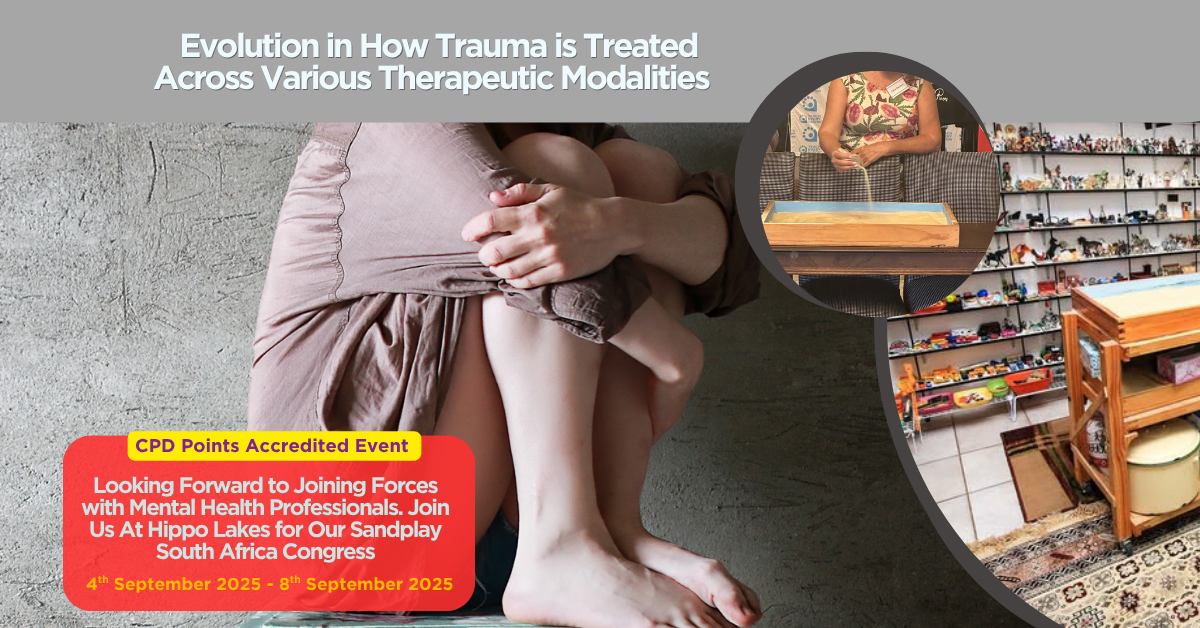
Therapeutic modalities refer to the different approaches, methods, or systems that therapists use to treat psychological, emotional, or behavioral issues. Each modality is grounded in a specific theory about how people develop, suffer, and heal. Therapists often specialize in one or more therapeutic modalities or integrate several, depending on the client’s needs.
Main Categories of Therapeutic Modalities
1. Psychodynamic Therapy
-
Core idea: Problems stem from unresolved unconscious conflicts, often rooted in childhood.
-
Focus: Insight, emotional processing, exploring early relationships.
-
Example: Freudian analysis, Jungian therapy, object relations, and sandplay therapy.
-
Useful for: long-standing emotional struggles, identity issues, and self-exploration.
2. Cognitive-Behavioral Therapy (CBT)
-
Core idea: Our thoughts, feelings, and behaviors are interconnected.
-
Focus: Identifying and changing unhelpful thinking patterns and behaviors.
-
Example: CBT, REBT (Rational Emotive Behavioral Therapy).
-
Useful for: anxiety, depression, phobias, and OCD.
3. Humanistic/Experiential Therapy
-
Core idea: People are inherently good and have the capacity to grow.
-
Focus: self-awareness, authenticity, and personal meaning.
-
Example: Person-Centered Therapy (Carl Rogers), Gestalt Therapy, Existential Therapy.
-
Useful for: life transitions, self-esteem, existential crises.
4. Somatic Therapies
-
Core idea: Trauma and emotion are stored in the body.
-
Focus: body awareness, physical sensations, nervous system regulation.
-
Example: Somatic Experiencing, Sensorimotor Psychotherapy, TRE.
-
Useful for: trauma, PTSD, chronic stress, and dissociation.
5. Systemic/Family Therapy
-
Core idea: Problems exist within relationships, not just individuals.
-
Focus: Communication patterns, family roles, intergenerational dynamics.
-
Example: Bowenian Therapy, Structural Family Therapy.
-
Useful for: family conflict, parenting, couple’s issues, and generational trauma.
6. Mindfulness-Based Approaches
-
Core idea: Present-moment awareness fosters mental health.
-
Focus: Acceptance, non-judgment, meditation practices.
-
Example: Mindfulness-Based Stress Reduction (MBSR), DBT (Dialectical Behavior Therapy), and ACT (Acceptance and Commitment Therapy).
-
Useful for: emotional regulation, anxiety, trauma, and chronic pain.
7. Creative/Expressive Modalities
-
Core idea: Healing happens through symbols, images, and non-verbal expression.
-
Focus: play, art, movement, sand, and storytelling.
-
Example: Art Therapy, Drama Therapy, Play Therapy, and Sandplay Therapy.
-
Useful for: children, trauma survivors, non-verbal processing, and attachment work.
8. Trauma-Focused Modalities
-
Core idea: Trauma changes the brain and body; targeted work is needed to heal.
-
Focus: memory processing, safety, nervous system healing.
-
Example: EMDR (Eye Movement Desensitization and Reprocessing), Trauma-Informed CBT, and Internal Family Systems (IFS).
-
Useful for: PTSD, complex trauma, abuse, and dissociation.
Many therapists today use integrative or eclectic approaches, combining elements of multiple therapeutic modalities to tailor treatment to each client.
MentalHealthProfessionals Therapists MultidisciplinaryCare Follow on Facebook

Comments are closed